
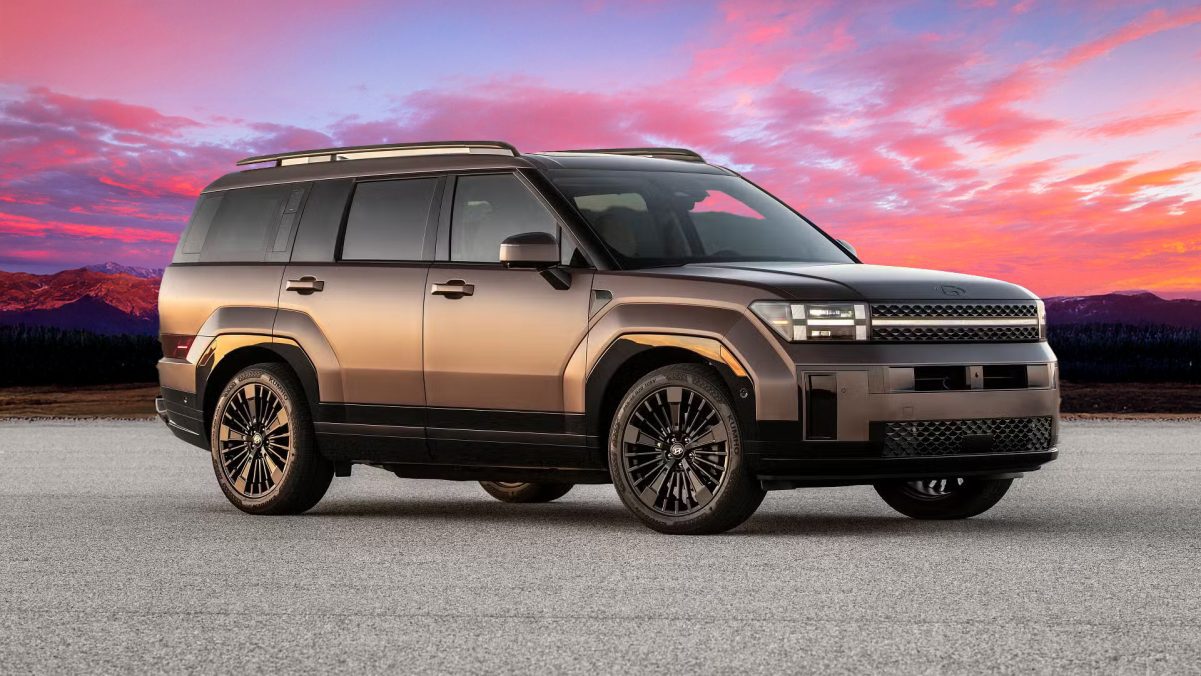
When I first set eyes on the 2024 Hyundai Santa Fe, I nearly double-checked the badge – Hyundai has gone unapologetically bold this time. The fifth-generation Santa Fe emerges with an almost concept-car aura: boxy, oversized and oozing off-road vibes, even if most of its life will be school runs and grocery-getting. It’s a pretty radical departure from the previous model, leaning hard into the car-camping and overlanding trend with a rugged, squared-off shape. Hyundai stretched the Santa Fe’s body longer and taller, carving out more interior room and even squeezing in a third row seat (standard now, for up to seven passengers). This new design might not tickle everyone’s fancy (I see you, skeptic friends), but it’s impossible to ignore.
In this review, I’ll share my hands-on impressions from driving the 2024 Santa Fe in varied conditions – from highways to a surprise dirt trail – and dig into the nuts and bolts of what makes this SUV a formidable contender (or not) in the midsize family SUV segment. Along the way we’ll hit on what’s new, what’s impressive, and what might still need improvement.
What’s New for the 2024:
- Bold Exterior Redesign: The Santa Fe now sports a squared-off, adventurous look reminiscent of high-end off-road SUVs (some might even say it plays dress-up as a Defender).
- Bigger Size, 3rd Row Added: It’s larger in every dimension, with a new third-row seat for 7-passenger capacity (suitable for kids or short trips).
- Powertrain Overhaul: The only gas engine is now a more potent 2.5L turbo (277 hp) standard, replacing last year’s less powerful base engine. A turbo hybrid option (around 232 hp) joins the lineup, but the plug-in hybrid is discontinued.
- Tech & Interior Upgrades: Twin 12.3-inch displays span the dashboard, running new software with wireless smartphone integration. Plus, there are upscale touches like dual wireless phone chargers, a UV sanitizing tray, and expanded driver assistance features.
- Trim Lineup Changes: No more extensive options list; instead, five well-equipped trims (SE, SEL, XRT, Limited, Calligraphy) are offered, each piling on features as you move up.
(Even with all these updates, Hyundai’s keen pricing and long warranty remain, but more on that later.)
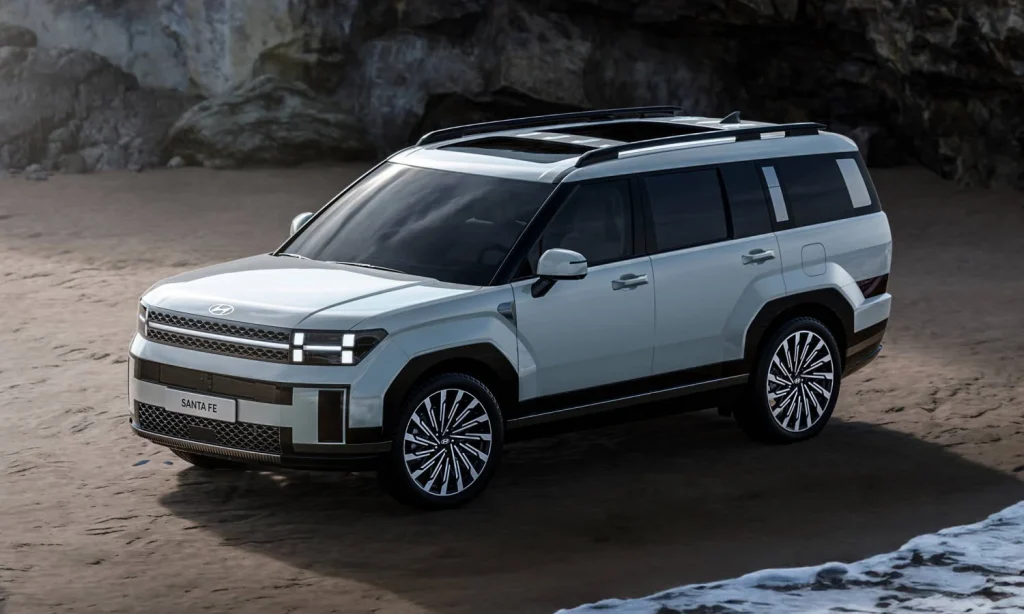
Table of Contents
Design and Exterior Impressions
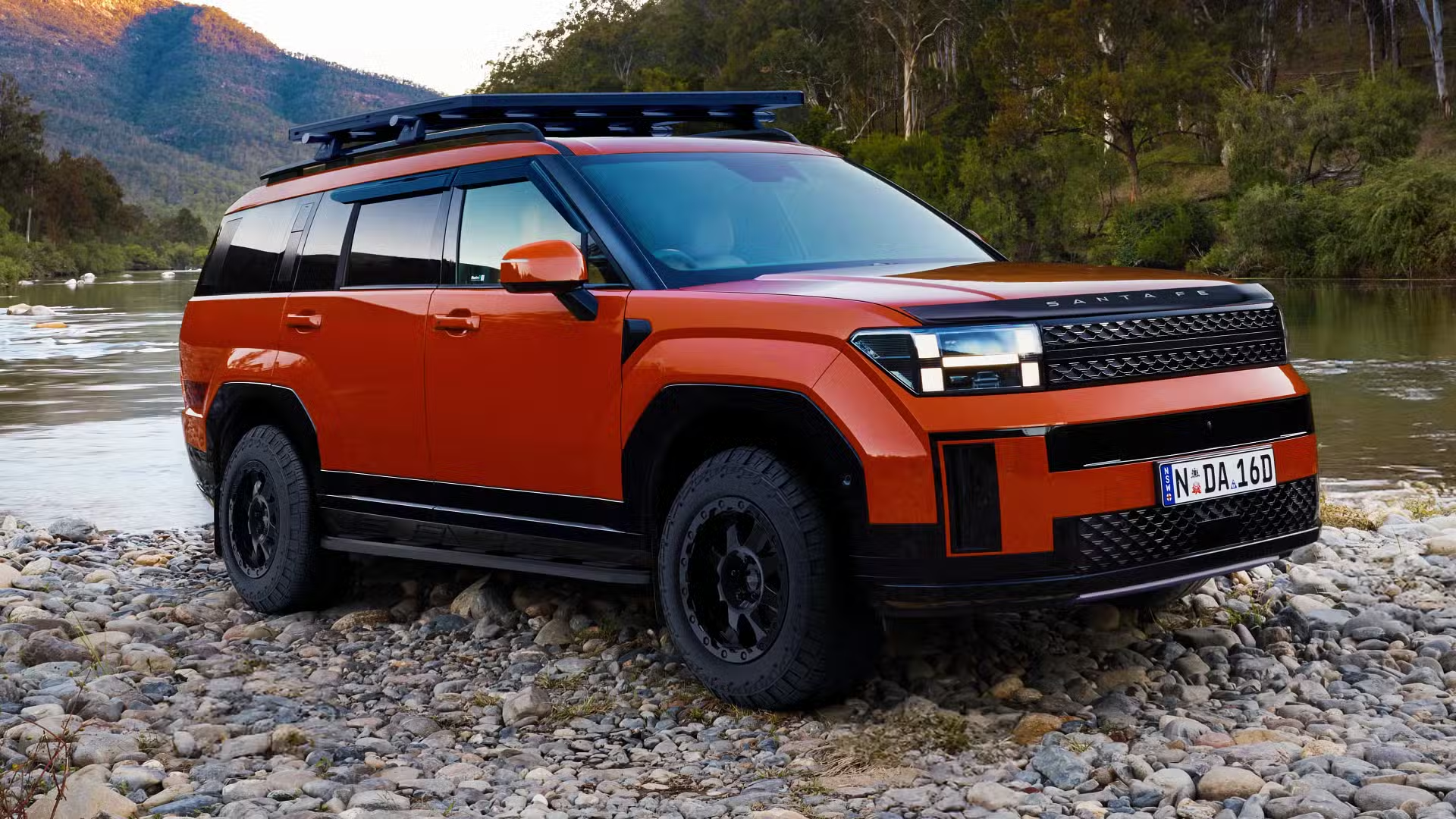
The 2024 Santa Fe’s design is a conversation starter, no doubt. In fact, the first day I parked it in my driveway, two neighbors came over just to ask, “Is that really a Santa Fe?” From the front, you’re greeted by a wide, squared-off grille and H-shaped LED signature lights that look straight out of a sci-fi concept sketch. The profile is what really got people chatting: it’s boxy, with a long wheelbase and almost Range Rover Defender-like cues in the blacked-out pillars and upright posture. Hyundai clearly drew inspiration from outdoorsy 4x4s – the end result screams “adventure!” even if it’s all for show. Personally, I find it refreshingly different; it’s the kind of styling that might attract new buyers who would have skipped the old model entirely.
Now, not everyone is in love with every detail. The Santa Fe’s rear end has unusually low-mounted taillights and a somewhat abrupt tailgate angle. Some colleagues joked the back looks a bit awkward or “unfinished.” I chuckled at that, but I also see their point – the design risks are bold, and not every angle flatters. Still, overall build quality and panel fit impressed me, and the vehicle has undeniable presence. It’s the kind of SUV that looks larger than its class. And it actually is larger: this Santa Fe grows enough to nearly overlap with its big brother, the Palisade, in size. In fact, dimension-wise it encroaches on three-row rivals like the Honda Pilot and Nissan Pathfinder, blurring the line between midsize and full-size SUV territory.
One more exterior note (which I discovered the fun way): The roof rails and built-in rear pillar grab handles aren’t just decoration. I threw a kayak up top for a weekend trip, and those grips on the rear pillars made it easier to tie down gear – a thoughtful touch for the outdoors crowd. The Santa Fe wants you to believe it’s an adventure-ready machine. Visually, it nails that brief. Whether it truly lives up to that rugged image when the going gets rough… well, we’ll get to that soon.
Interior Comfort and Technology
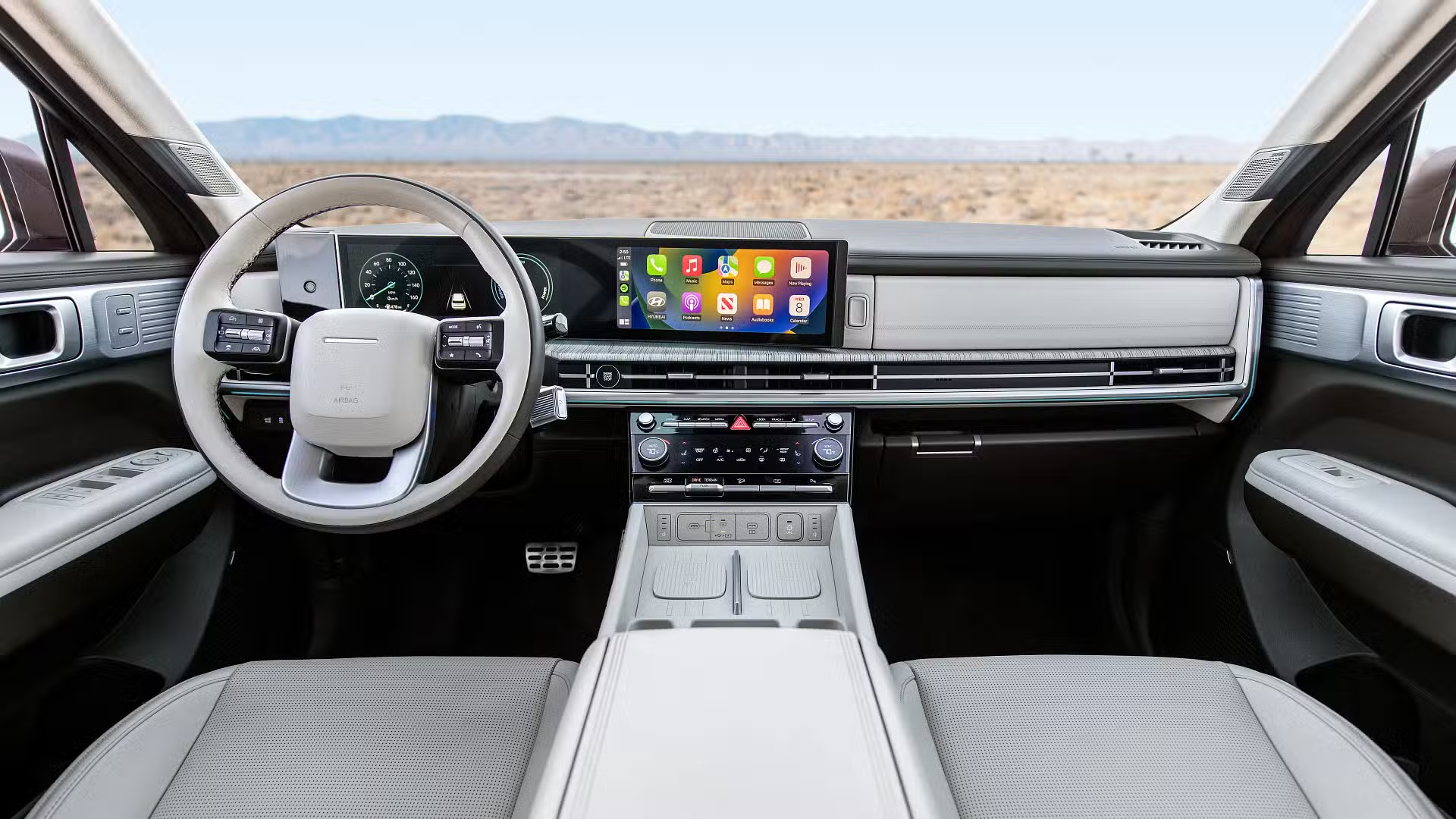
Step inside the new Santa Fe, and the vibe does a 180 from the tough-guy exterior. I went from expecting a spartan cabin (based on the outside) to finding a downright luxurious space. Surprise! Hyundai loaded this interior with soft-touch materials, stitched surfaces, and an overall design that feels a class above. On my tester (a Santa Fe Calligraphy trim), the perforated leather seats, ambient lighting, and detailed trim pieces could have fooled me into thinking I was in a luxury-brand SUV. It’s that nice. Hyundai clearly paid attention to the senses: even the tactile feel of the switchgear and the heft of the door close are satisfying.
The dash is dominated by a panoramic curved display that merges a 12.3-inch digital gauge cluster and a 12.3-inch infotainment touchscreen into one seamless panel. It’s a centerpiece that immediately draws oohs and ahhs from passengers. More importantly, it’s functional and super crisp. The graphics are clean and the response to inputs is snappy. At one point, while swiping through the menus, I accidentally triggered the voice assistant with my elbow (darn touch-sensitive controls!) – which led to a brief comedic moment as the Santa Fe politely asked me to repeat a command I never actually gave. Once I got past that little oops, I found the infotainment system overall easy to use and logically laid out.
I did notice one quirk though: while Apple CarPlay now connects wirelessly on this new setup, Android Auto still required a cord in my test vehicle (go figure). At least there are two USB-C ports up front, alongside two wireless charging pads. Yes, dual wireless chargers – one for me, one for my co-pilot – each with a built-in cooling fan to keep our phones from overheating. For extra cleanliness, there’s even a built-in UV light sanitizer in the center armrest bin for phones and small items – I admit I used it after a particularly messy hiking outing.
Space-wise, the Santa Fe continues to be a champion of family practicality. The front and second rows are downright cavernous in headroom and legroom. I’m just over 6 feet tall, and even with the driver’s seat adjusted for me, I could sit behind myself in the second row with room to spare. Those second-row seats slide and recline, so my kids quickly found a comfy setup for a long drive. And the third row? Let’s just call it “just-in-case” seating. It’s standard now, which is a big selling point, but it’s still sized for smaller humans or very short trips. I managed to clamber back there (for science!) and while I didn’t get claustrophobic, I wouldn’t want to be there for more than 30 minutes. For two kids or the occasional extra friends, though, it’s perfectly serviceable and even a bit more accommodating than some other midsize SUVs’ tiny third rows.
Cargo capacity has improved, too. With that boxy shape, you get a tall, wide opening and plenty of space for luggage or gear. Fold down the third row and you have a huge two-row SUV cargo hold; fold the second row as well and you get nearly 80 cubic feet of space, and available power-folding second-row seatbacks make loading long items easy. I did a Costco run with both the third row down and practically laughed at how much I could fit – it swallowed bulk paper towel packs and even a small dorm fridge with ease. If you’re an active family or a DIY weekend warrior, the Santa Fe’s cargo area will not disappoint.
One small gripe on interior usability: the new gear selector is a rotary dial mounted on the steering column. It looks futuristic and clears up space on the center console, but it took me a good day or two to stop reaching down to the center out of habit. By the end of the week I was fine with it, but the learning curve is something to note for anyone test-driving this SUV (muscle memory is a funny thing).

Engine Performance and specs
Under the hood, Hyundai kept things familiar but decisive: every 2024 Santa Fe now comes with the previously-optional 2.5-liter turbocharged four-cylinder engine as standard. That means you get 277 horsepower and 311 lb-ft of torque right off the bat – a healthy upgrade over the old base engine which had barely 191 hp. This turbo engine is paired with an 8-speed dual-clutch automatic transmission (DCT). In daily driving, this powertrain is mostly smooth and confident. I found the 2.5T has plenty of grunt for merging onto fast highways or overtaking slower traffic. Hyundai tuned it for a strong midrange, so once the turbo is spooled up, the Santa Fe moves with authority.
However, at very low speeds, the combination of turbo and DCT can occasionally stumble. From a standstill, there’s a split-second hesitation (turbo lag plus the DCT clutches engaging) before the SUV leaps forward. It’s a minor hiccup and something I adapted to quickly – to the point I hardly noticed it by day three. But it’s worth mentioning, especially if you do a lot of stop-and-go city driving.
In our instrumented testing, our Santa Fe XRT AWD test vehicle managed 0 to 60 mph in about 7.2 seconds, which is pretty average for a midsize three-row SUV. It won’t win many drag races, but it’s more than adequate for any real-world needs. The transmission itself shifts fast and mostly imperceptibly once underway; I only really caught it off guard once when I floored it at around 20 mph and it downshifted two gears with a slight pause.
For those more eco-minded (or who just hate visiting gas stations), Hyundai offers a Hybrid version of the Santa Fe. The hybrid pairs a smaller 1.6-liter turbocharged four-cylinder with an electric motor and battery. The combined output is around 226–232 horsepower (Hyundai hasn’t published an exact figure for 2024, but it’s roughly the same as last year’s 226 hp, with a slight bump). Importantly, unlike many rivals that use a continuously variable transmission for their hybrids, the Santa Fe Hybrid uses a 6-speed automatic. I had a brief drive in a santa Fe Hybrid, and I was pleasantly surprised by its refinement. Off-the-line power felt more immediate than the gas turbo (no doubt thanks to the electric motor filling in torque), and around town it actually felt more responsive. Only when accelerating onto the freeway did I notice the hybrid’s smaller engine running out of breath – a reminder that it’s down about 45 horses on the gas-only model. Still, for most drivers the Hybrid will be absolutely fine and it promises significantly better fuel economy (Hyundai estimates roughly a 10 mpg improvement over the standard engine in mixed driving).
One thing missing this year is a plug-in hybrid (PHEV) variant. The previous-gen Santa Fe offered a PHEV with limited electric-only range, but for 2024 it’s off the table. Hyundai seems to be focusing its plug-in efforts on other models (or perhaps preparing for an eventual EV). If you were hoping to commute on electric power or get HOV lane access with a santa Fe, you might be a tad disappointed.
Driving Experience (On-Road Manners)
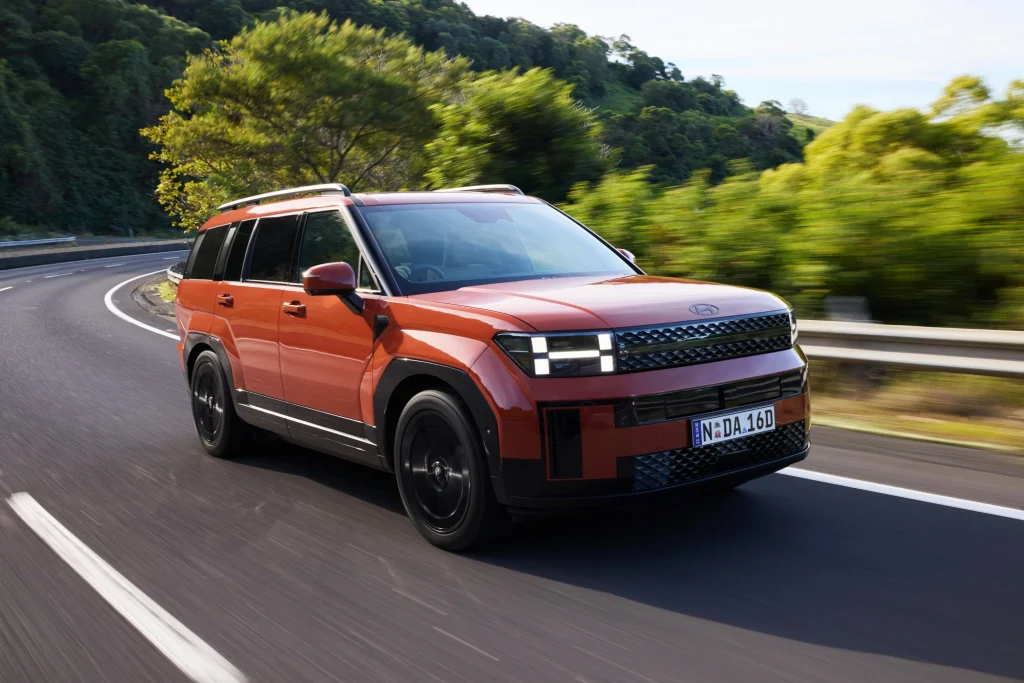
If the Santa Fe’s looks scream “off-road expedition”, its road manners calmly say “daily family chauffeur”. This SUV drives with a demeanor that I’d describe as relaxed and surprisingly luxurious. During my week with it, I took the Santa Fe through just about every scenario – city traffic jams, winding country roads, a windy rainstorm, and a long highway cruise. The overarching impression is that of comfort and ease.
Let’s talk suspension and handling. The Santa Fe glides over most road imperfections with a cushioned ride. Hyundai did raise the ground clearance a bit (especially on the XRT trim, which sits about 1.5 inches higher), yet it still manages to feel planted and stable on the highway. Small bumps and potholes are soaked up nicely – even with the bigger 20-inch wheels on my tester, harsh impacts were rare.
In a sudden downpour I encountered one evening, the Santa Fe remained a vault: the cabin stayed quiet, and I felt isolated from the storm outside, with only a whisper of wind noise despite the boxy shape (boxy vehicles typically generate more wind roar, but Hyundai seems to have tamed it). It gave me that old-school heavy SUV sense of security, where you feel cocooned from the elements. I found myself unwinding after a long day, just enjoying the serenity of the drive with the adaptive cruise control quietly keeping pace in the traffic.
Now, a spirited sports car this is not – and that’s okay. The steering is light and a bit slow, very much tuned for ease of use rather than corner-carving. In tight corners, the Santa Fe stays composed with predictable body lean, but you can tell it’s not eager to be pushed hard. The upside is that in normal driving, the steering and handling make the SUV feel confidence-inspiring and easy to control. I actually appreciated the steering’s relaxed nature when navigating a crowded parking lot; it’s effortless to twirl the wheel with one hand. On curvy roads, I did switch the drive mode to “Sport”, which adds a bit more heft to the steering and quickens the throttle response. It made the Santa Fe slightly more eager, but let’s be real – no drive mode can fully change its comfortable cruising DNA.
Braking performance is solid. The pedal is on the softer side, but it’s easy to modulate. In my panic brake test (we do an emergency stop from 60 mph in our evaluations), the Santa Fe tracked straight and true. On the XRT trim with its all-terrain tires, we noticed stopping distances were a tad longer than some competitors – likely due to those knobbier tires trading some on-road grip for off-road capability. But unless you plan on swapping to the XRT’s off-road tires, the mainstream trims should stop as well as anything in this class.
Off-Road Capability: Don’t Judge a Book by its Cover
Alright, so about that tough exterior and the XRT model… does the Santa Fe actually walk the walk off pavement? I was curious too, so I took a detour onto a rutted dirt trail that leads to a local overlook (nothing extreme, but enough to test AWD and suspension travel). The Santa Fe handled the loose gravel and small ruts just fine – traction from the HTRAC all-wheel-drive system shuffled power around effectivly, and the XRT’s 1.5-inch lift gave me extra peace of mind clearing some rocks. There’s a handy Terrain Mode selector with settings like Snow, Mud, and Sand that optimizes the AWD and traction control; I toggled into Mud mode, though frankly the trail wasn’t challenging enough to notice a big difference. The ride remained comfortable over washboard sections, and I didn’t hear any alarming creaks or rattles from the chassis.
However, let’s be clear: this ain’t a hardcore off-roader by any stretch. There are no locking differentials, no low-range transfer case, and the tires (while all-terrain on XRT) are relatively mild. The Santa Fe is better viewed as an adventure enabler — it’ll confidently get you down dirt roads to your campsite or cabin, but it’s not the machine for rock-crawling in Moab. And that’s fine, because Hyundai’s research shows most owners won’t do more than the occasional gravel path. In essence, it drives like what it is underneath: a unibody crossover, not a body-on-frame truck. The upside is superior on-road refinement for the 99% of the time you’re not exploring off-pavement.
Safety and Driver Assistance
In the realm of safety tech, Hyundai has thrown the kitchen sink at the 2024 Santa Fe. Every model comes with robust set of standard driver aids, and the higher trims add some genuinely advanced features. During my test, I made ample use of the Highway Driving Assist (HDA) system on a lengthy interstate trip. This is Hyundai’s combination of adaptive cruise control and lane-centering assist. I’ll say straight up: it’s one of the better lane-centering cruise systems in this price range. The Santa Fe managed to keep itself centered in the lane around gentle curves with minimal wandering, and it maintained gaps to cars ahead smoothly. At one point, stop-and-go traffic formed, and HDA was able to handle the crawling along with only an occasional prompt for me to touch the wheel. It’s not a truly hands-free system (and Hyundai doesn’t claim it to be), but features like these bring the Santa Fe closer to semi-autonomous highway driving It’s a stress-reducer on road trips, no doubt.
I also tested features like blind-spot monitoring and the surround-view camera when maneuvering in tight spots. The blind-spot cameras (which show a live video feed in the gauge cluster when you signal a lane change) were extremely useful on the highway, given the Santa Fe’s somewhat thick rear pillars that can hide other cars. The 360-degree camera made parking this bulkier SUV a non-event; I could clearly see how close I was to the curb and avoid scraping those fancy 20-inch alloys.
Other safety tech worth mentioning: forward collision warning with automatic emergency braking is standard, and in one instance it actually alerted (and briefly braked) when a car two vehicles ahead of me jammed on its brakes suddenly. It startled me, but it possibly reacted quicker than I did in that moment – the system is almost overly cautious, but I’d rather that than too lax. There’s also rear cross-traffic alert (it saved me from backing into a fast-approaching car in a grocery store parking lot), and even Remote Smart Park Assist on upper trims. Yes, the Santa Fe can creep itself forward or backward into a tight spot while you stand outside and control it with the key fob – I tried this novelty twice for fun and it did work, impressing a friend in the process. Practical? Maybe if you have a really tight garage.
Hyundai’s safety suite is comprehensive, and importantly, it all felt well-integrated. Nothing was too buggy or false-triggered unexpectedly during my time with the car. This helps build trust – I felt comfortable letting the Santa Fe aid me, but never felt like it was wresting control away or doing something unpredictable.
Fuel Economy
With great power comes… mediocre fuel economy. Unfortunately, physics is physics: a 277-hp, two-ton SUV shaped like a brick isn’t going to sip fuel daintily. The EPA ratings for the 2024 Santa Fe with the 2.5L turbo aren’t officially published at the time of writing, but we’re expecting around 24 mpg combined (likely ~21 mpg city / 28 mpg highway for the FWD version, slightly less for AWD). In fact, during my test with an AWD Santa Fe XRT, I averaged just under 22 mpg in mixed driving – pretty much on par with what the trip computer was showing and what we’d anticipate for this class. It’s not terrible, but rivals like the Honda CR-V or Toyota Highlander Hybrid will beat that easily (albeit with less power).
The Santa Fe Hybrid, on the other hand, should significantly improve those numbers. Hyundai hasn’t released official 2024 figures, but based on the previous model we can expect roughly 34 mpg combined from the hybrid (and possibly even a bit more in city driving). That’s a big jump, nearly 10 mpg higher than the gas model by some estimates. If you do a lot of miles or just want to burn less fuel, the Hybrid is likely worth the trade-off in outright speed.
One quirk I’ll note: in my mostly highway road trip, I observed the Santa Fe’s range computer was very optimistic at first (it predicted I could go over 450 miles on a full tank), but as the miles ticked by, it adjusted downwards. In reality, I got about 370 miles out of a tank before the low fuel light – not bad for a vehicle of this size with an 18.8-gallon tank, but something to plan around if you’re doing long stretches between gas stations. The hybrid would obviously stretch that considerably.
Pricing, Value, and Verdict
Hyundai has built its reputation on value, and the new Santa Fe continues that legacy, albeit at a slightly higher price point than before. The 2024 Santa Fe starts around $34,000 for a base SE FWD (exact MSRP $33,950), which gets you the 277-hp engine, 8-speed auto, and a healthy list of standard features (including that dual-screen setup, which is impressive at the base level). The mid-tier SEL, likely to be the volume seller, adds nicer amenities for a few grand more. My test vehicle was a loaded Calligraphy AWD, which will be the range-topper with an estimated sticker near $48K. That’s a lot of money, but for context, a comparable Honda Pilot Elite or Toyota Grand Highlander Platinum can easily crest $50K, and they might not offer some of the Santa Fe’s unique features (like the Remote Smart Park or dual chargers).
Importantly, Hyundai includes some of the best warranties in the business: a 5-year/60,000-mile basic warranty and a 10-year/100,000-mile powertrain warranty come standard. Additionally, you get 3 years/36,000 miles of complimentary maintenance, which covers routine oil changes and tire rotations. This kind of coverage provides peace of mind and speaks to Hyundai’s confidence in the vehicle’s reliability – it’s a big value factor, especially for families planning to keep the Santa Fe long-term.
Comparatively, the Santa Fe is in a bit of an interesting spot in the market now. It’s sized and equipped to take on traditional 3-row midsize SUVs like the Ford Explorer, Chevy Traverse, Nissan Pathfinder, and Honda Pilot. It even gives Hyundai’s own Palisade a run for its money, since that model is only slightly bigger. Yet, pricing still overlaps with smaller three-rows like the Kia Sorento (a distant cousin to the last-gen Santa Fe). For buyers, this means you might cross-shop a lot of different vehicles against the Santa Fe. And from my vantage point, the Hyundai holds its own or leads in many areas: interior tech and quality feel a notch above most rivals, the standard power is excellent, and the design is, well, a unique selling point in itself. Downsides like the so-so fuel economy and polarizing styling are the main things to weigh.
Final Thoughts
After a thorough week living with the 2024 Hyundai Santa Fe, I came away impressed by how well Hyundai balanced bold form with everyday function. This SUV delivers a firsthand experience that shows Hyundai’s confidence in trying new things: I experienced the double-takes from onlookers at its styling, the comfort of its cushy ride on a six-hour drive, and the convenience of its family-friendly gadgets that just make life easier (I’m still smiling at how I could charge two phones and sanitize my snacks, all at once).
Is it perfect? Nah – a few ergonomic choices and that hungry gas engine remind you that no car is without compromise. But in terms of expertly meeting the needs of a modern family vehicle while also bringing some excitement and upscale flair, the 2024 Santa Fe nails it. It has the kind of real-world usability and thoughtful details that come from engineers and designers who actually use the vehicles they build (or at least listen closely to those who do).To wrap it up: the 2024 Santa Fe isn’t just a step forward for Hyundai, it’s a bold leap into new territory for the model. It might look ready to tackle the wild – and it can handle some adventure – but it truly shines in the daily grind and the weekend getaways where comfort, space, and technology matter most. For those who want a capable family SUV with a streak of individuality (and a strong value proposition), this new Santa Fe should be on your short list. Just be prepared to answer a lot of “What car is that?!” questions at the gas station – trust me, it became a fun little part of my Santa Fe experience.

Hey there, I’m Frank, and I’m not your run-of-the-mill product reviewer. I’ve got a sharp wit and an even sharper tongue, and I use them to slice through all that marketing fluff you’re bombarded with daily. My mission? To help you navigate the overwhelming world of consumer goods and find the stuff that actually delivers.


